
Introduction
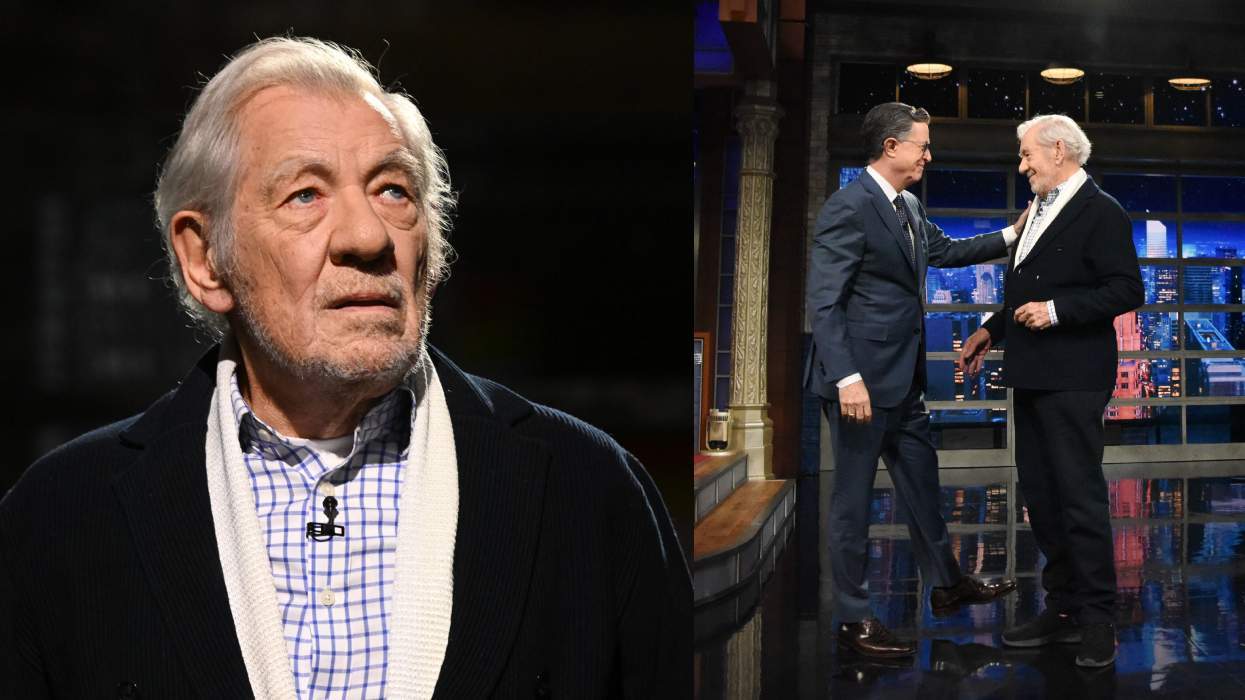
A SHAKESPEAREAN WAKE-UP CALL: Ian McKellen's Moral Masterclass on The Late Show
When Sir Ian McKellen walked onto the set of The Late Show with Stephen Colbert in early 2026, the atmosphere was initially one of nostalgic celebration. At 86, the legendary actor remains a titan of both stage and screen, and the audience was prepared for a lighthearted journey through Middle-earth and the X-Men universe. However, what followed was not a standard promotional junket, but a cultural flashpoint that has since dominated the national conversation.
Midway through the interview, the tone shifted. Colbert, known for his own deep love of literature and ethics, asked McKellen about the relevance of classic drama in an age of digital noise and social fragmentation. Without missing a beat, McKellen rose from his chair. The studio lights seemed to dim instinctively as he bypassed the anecdotes and delivered a thunderous, unscripted Shakespearean monologue—specifically, the "Stranger's Case" speech from the play Sir Thomas More.
The monologue, which pleads for the humane treatment of refugees and the recognition of our shared "humanity," struck directly at the heart of America's current moral conscience. In the silence of the Ed Sullivan Theater, McKellen's voice—honed by decades of Royal Shakespeare Company discipline—didn't just recite lines; it channeled a visceral, ancient wisdom. He spoke of the "mountainous inhumanity" that occurs when we forget that we, too, are but guests in this world.
Why this moment connected so powerfully with audiences in 2026 is a testament to the "truth-telling" power of great art. In an era where political discourse is often reduced to 15-second soundbites and polarized vitriol, McKellen provided a much-needed "moral mirror." Viewers across the country reported being moved to tears, not by a political argument, but by the sheer weight of a human soul pleading for empathy.
The breakdown of the performance reveals why it went viral within minutes: McKellen used the language of the 16th century to diagnose the sickness of the 21st. He reminded the audience that "glory" is not found in exclusion, but in the courage to see oneself in the eyes of a stranger.
As the segment ended, Colbert sat in stunned silence for several seconds before simply whispering, "Thank you." It wasn't just a late-night appearance; it was a living eulogy for a more compassionate world. In 2026, as we grapple with unprecedented global shifts, Ian McKellen's performance serves as a reminder that while roles may be iconic, the character of a nation is defined by how it answers the call of conscience.